Differences Between Solenoid and Diaphragm Pumps?
-
In spite of the fact that solenoid driven metering pump are frequently utilized for the purpose of precise liquid dosing, there are still a great deal of questions concerning the principles that govern their operation.
To move liquid in controlled strokes, solenoid metering pumps make use of solenoid valves that also function as actuators. This allows the pumps to regulate the flow of liquid. It is the solenoid, which is a device that receives electrical pulses that generate a magnetic field, that is responsible for pushing a plunger that is connected to the diaphragm. Consequently, this is the cause of both the suction and the discharge of fluid that occurs through the check valves.
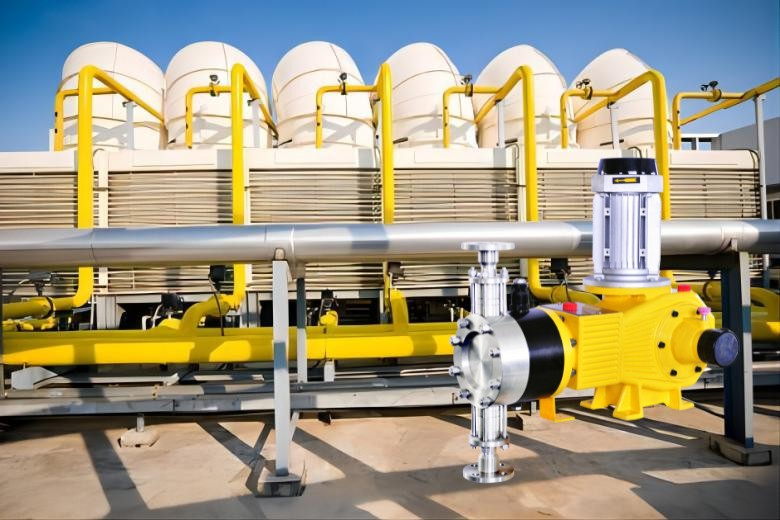
This mechanism is utilized by five of the most significant solenoid pump models constructed by HAOSH, which are as follows:
When it comes to the treatment of water and wastewater, the H Series is an excellent choice because it can handle flows of up to 11 liters per hour at pressures of up to seven bars.
When it comes to large plants, the HH Series provides an innovative design that is capable of delivering doses ranging from 10 to 80 L/H against pressures of up to 7 bars.
For mechanical diaphragm pumps with capacities of up to 160 liters per hour at 25 bars, it is recommended that direct shaft motion be utilized.
The utilization of motor-driven hydraulic power is required in order to accomplish extremely high flows of more than one thousand liters per hour when using hydraulic pumps.
Because of the electromagnetic actuation of the solenoid, it is possible to perform hydraulic pumping action with a minimal number of moving parts. This results in an operation that is dependable and free of contamination across a wide variety of industries. The utilization of precise pulse control, which ultimately results in consistent dosing performance, is what allows for the achievement of accurate treatment procedures.
Differences Between Diaphragm Pumps and Solenoid Pumps: These Differences Are Crucial
When contrasted with mechanically actuated diaphragm pumps, solenoid pumps utilize the plunger-diaphragm design, which enables a lower volume displacement at lower pressures. This, in turn, allows solenoid pumps to be more efficient. Mechanical pumps are able to convey higher throughputs while simultaneously overcoming higher system pressures because they are able to drive the diaphragm shaft, which is directly connected to the pump.